
The power conversation around AI data centers has collapsed into a procurement question. Which source is cheapest per megawatt-hour? Which is cleanest? Reasonable questions. Wrong starting point.
The decision a developer actually faces is a capital allocation problem under a time constraint. The variable that determines the return on a multi-billion dollar build is not the unit cost of electricity. It is whether the facility can be energized when the revenue is there to be captured.
The numbers make the problem concrete. In major data center hubs, grid interconnection now runs four to seven years from request to energized site. Nearly 2,300 gigawatts of generation and storage sit in US queues, more than the entire installed capacity of the country. Meanwhile the IEA projects global data center electricity consumption to roughly double by 2030. Capital is ready. The grid is not. The gap between the two is where returns are made or destroyed.
In my latest piece, I work through two errors that both kill value. The first is obvious: a facility built and idle, waiting for grid power, while the interest clock runs and contracted demand goes to whoever energizes first. The second looks like prudence: waiting for the perfect energy stack, the cleaner source, the firmer connection. A flawless facility energized in 2031 may have missed the demand it was built to serve.
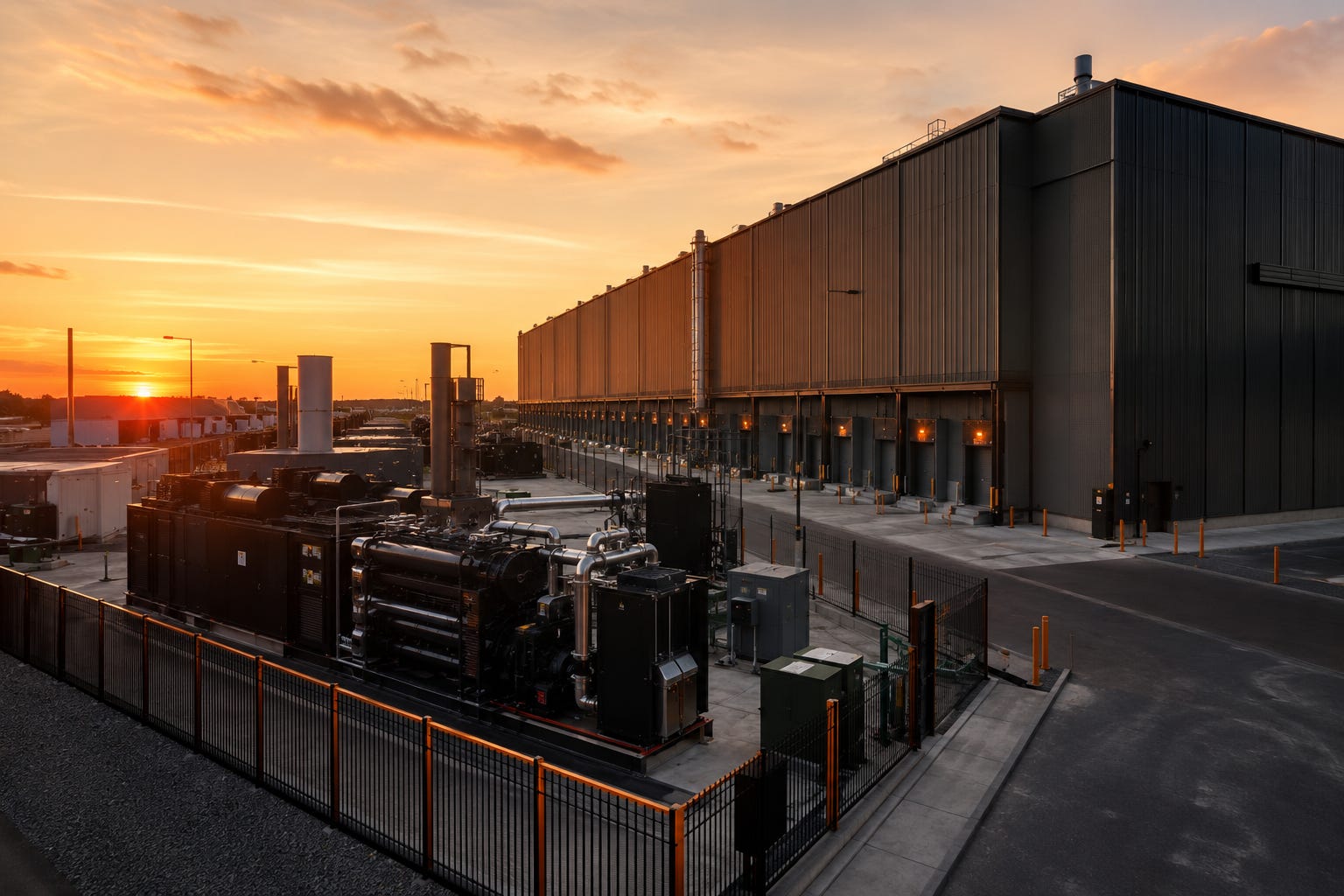
The piece also makes the case for two financial properties of onsite generation that never appear in a levelized cost calculation:
Time arbitrage. Onsite power does not compete with wholesale generation. It competes with the delivered cost of firm power at a specific site, in five years, and at a specific point in time. On project IRR, the premium is often the cheaper option, because the alternative is no revenue at all.
Optionality. An energy decision made today does not have to be the decision for the life of the asset. A site built to take gas now, storage as it becomes economic, and a grid connection when it arrives keeps the ability to adapt as prices, policy, and technology move. That flexibility has a financial value, and a least-cost-today decision that forecloses it is more expensive than it looks.
The logic has limits, and I state them. This is not an argument that onsite generation always wins. It is an argument that the decision belongs in a capital allocation frame, judged on time and optionality, not a procurement frame judged on unit cost alone.
Read the full piece here:
Speed to Power vs. Cost of Mistake: The New Capital Allocation Problem in AI Infrastructure