
There is a serious case circulating that the data center industry does not need to build its own power. It deserves a serious answer. I published one this week. This is the short version.
The setup first, because the argument is good.
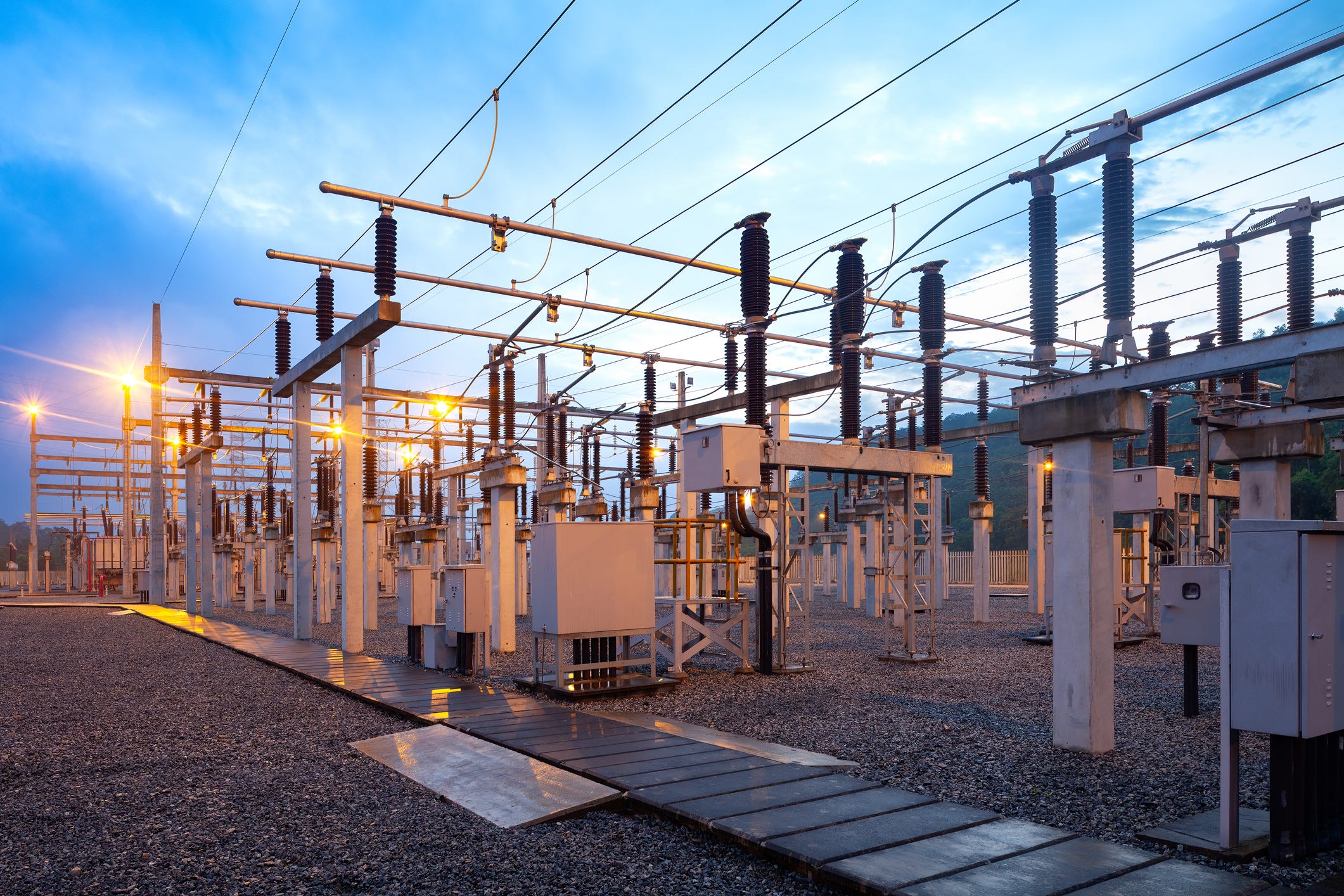
In February 2026, EPRI announced a collaboration with Nvidia, Prologis and InfraPartners to site small data centers, 5 to 20MW each, at electrical substations that already have unused capacity. There are roughly 55,000 substations in the United States. Spare capacity of 5 or 10 or 20MW at each of them adds up quickly. Duke University’s Nicholas Institute found that the largest 22 balancing authorities could absorb around 76 gigawatts of new load if that load accepted curtailment averaging 0.25 percent of its annual consumption. At 1.0 percent, the figure reaches 126 gigawatts.
The reason is structural. The US power system was built to serve a peak it rarely touches. Generation capacity runs at around 53 percent utilization on average. The highest-demand hours happen for fewer than 200 hours a year.
So there is a large quantity of underused capacity sitting inside the existing distribution network. That is correct. The industry has spent three years talking about new generation while under-using the flexible assets already installed. Anyone dismissing this as a distraction is wrong.
My problem is not the pilot. It is what the pilot is being used to prove.
The percentage and the hours are different numbers
EPRI’s micro data center lead has said workloads in the pilot would need to move to a different substation only about 0.1 percent of the time. That sounds trivial. It is roughly nine hours a year.
The same reporting notes that peak demand periods run to just under 200 hours a year. Those two figures are more than twenty times apart and they describe the same grid.
The Duke work explains why. The headline curtailment rate is measured in energy, not in hours. A site asked to shed 20 percent of its load for four hours registers as a very small energy percentage. It is still a four-hour operational event. At the 0.25 percent energy figure, Duke found some degree of curtailment occurring across about 85 hours a year. At 0.5 percent, around 177 hours.
That is the number an operator needs before signing a flexible interconnection agreement. It is not the number in circulation.
Three things nobody has published
Headroom is a stock, not a flow. Each megawatt of spare distribution capacity gets allocated once. Every assumption behind the 0.1 percent figure is a first-mover assumption, calculated against a network where nobody else is doing this yet. If the model works, it gets copied, and the copying consumes the conditions that made it work. What do the terms look like for the second and third tenant at the same substation?
Peak non-coincidence is the load-bearing assumption. Distributing 25 sites across five utilities delivers resilience only if those five utilities experience stress at different times. Uri in 2021 and Elliott in 2022 both produced simultaneous stress across multiple balancing authorities. Extreme heat behaves the same way. The events that actually threaten a data center’s power supply are the events most likely to be correlated across wide geography. The correlation analysis has not been published.
It solves for the load that was never the constraint. Inference is one of very few workloads that can be dynamically routed. The pilot is designed for inference, and that is sound engineering. But the interconnection queues and the multi-year utility timelines that started this entire debate are driven by training campuses drawing hundreds of megawatts at a single location. The substation model does not touch them.
What the argument quietly concedes
This is the part that has gone unremarked.
Duke names three mechanisms by which a large load delivers flexibility: shift the workload, reduce operations, or run onsite generation. One of the report’s authors has said directly that the growth of onsite generation and storage is part of why this approach is viable now, because a curtailed facility does not have to go dark.
So the substation model does not remove onsite generation from the system. It changes what onsite generation is for.
In the conventional framing, generation on site exists because the grid cannot deliver enough power fast enough. In the flexible interconnection framing, generation on site exists because it is the instrument that makes the flexibility commitment credible. Without it, curtailment means lost revenue and broken SLAs. With it, curtailment is a fuel switch.
The asset moves from being the primary supply to being the thing that makes the contract signable. That makes it more strategically important, not less.
The technical debate looks like it is about capacity. It is actually about which side of the meter the dispatch decision sits on. Taking spare substation capacity means accepting that somebody else decides when your load comes down, in exchange for connecting years earlier. That is a rational trade. It is also a real transfer of control, and it should be priced as one.
My expectation is that these sites get built, that they work, that they are genuinely useful for inference at the edge, and that a meaningful proportion end up with generation or storage behind them anyway. Not as a fallback. As the reason the interconnection agreement could be signed at all.
Spare grid capacity is real. Firmness is a separate product, and somebody still has to supply it.
The full article sets out the four disclosures that would change my mind, and why the first three tell you whether this is a durable model or a first-mover arbitrage.
Read the full analysis: What the Substation Headroom Argument Leaves Out
This piece first appeared at alexmarshallenergy.com.
Explore the Book - Five Nines and Fast Power - Making Better Decisions in AI Data Center Investments. Available on Amazon.